Calculating the volume of a pressure vessel is a critical task, especially for those in industries where precise measurements are essential. As a pressure vessel supplier, I’ve encountered numerous clients seeking guidance on this topic. In this blog, I’ll delve into the methods and considerations for calculating the volume of a pressure vessel, providing you with the knowledge to make informed decisions. Pressure Vessel
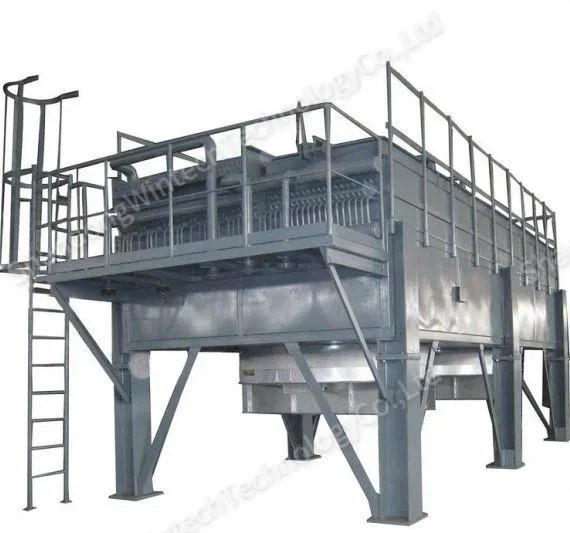
Understanding the Basics of Pressure Vessels
Before we jump into the calculations, it’s important to understand what a pressure vessel is. A pressure vessel is a container designed to hold gases or liquids at a pressure substantially different from the ambient pressure. These vessels are used in a wide range of industries, including chemical, oil and gas, and food processing.
The shape of a pressure vessel can vary significantly, with common shapes including cylindrical, spherical, and ellipsoidal. Each shape has its own unique formula for calculating volume, which we’ll explore in detail.
Calculating the Volume of a Cylindrical Pressure Vessel
Cylindrical pressure vessels are one of the most common types. To calculate the volume of a cylindrical pressure vessel, you’ll need to know its radius (r) and length (L). The formula for the volume of a cylinder is:
[ V = \pi r^2 L ]
Let’s break down the steps to calculate the volume:
- Measure the radius: The radius is the distance from the center of the cylinder to its outer edge. Measure this value accurately using a measuring tape or caliper.
- Measure the length: The length is the distance along the axis of the cylinder. Again, measure this value precisely.
- Square the radius: Multiply the radius by itself. For example, if the radius is 2 meters, then ( r^2 = 2^2 = 4 ) square meters.
- Multiply by pi: Pi (( \pi )) is a mathematical constant approximately equal to 3.14159. Multiply the squared radius by ( \pi ).
- Multiply by the length: Multiply the result from step 4 by the length of the cylinder.
For example, if a cylindrical pressure vessel has a radius of 2 meters and a length of 5 meters, the volume would be:
[ V = \pi r^2 L = 3.14159 \times 2^2 \times 5 = 62.8318 \text{ cubic meters} ]
Calculating the Volume of a Spherical Pressure Vessel
Spherical pressure vessels are also commonly used, especially in applications where high pressure needs to be contained. The formula for the volume of a sphere is:
[ V = \frac{4}{3} \pi r^3 ]
Here are the steps to calculate the volume of a spherical pressure vessel:
- Measure the radius: As with the cylindrical vessel, accurately measure the radius of the sphere.
- Cube the radius: Multiply the radius by itself three times. For example, if the radius is 3 meters, then ( r^3 = 3^3 = 27 ) cubic meters.
- Multiply by ( \frac{4}{3} \pi ): Multiply the cubed radius by ( \frac{4}{3} \pi ).
For example, if a spherical pressure vessel has a radius of 3 meters, the volume would be:
[ V = \frac{4}{3} \pi r^3 = \frac{4}{3} \times 3.14159 \times 3^3 = 113.0973 \text{ cubic meters} ]
Calculating the Volume of an Ellipsoidal Pressure Vessel
Ellipsoidal pressure vessels are often used when a more compact design is required. The formula for the volume of an ellipsoid is:
[ V = \frac{4}{3} \pi a b c ]
where ( a ), ( b ), and ( c ) are the semi – axes of the ellipsoid.
To calculate the volume of an ellipsoidal pressure vessel:
- Measure the semi – axes: Measure the three semi – axes of the ellipsoid. These are the distances from the center of the ellipsoid to its outer edge along three mutually perpendicular directions.
- Multiply the semi – axes: Multiply the values of ( a ), ( b ), and ( c ) together.
- Multiply by ( \frac{4}{3} \pi ): Multiply the result from step 2 by ( \frac{4}{3} \pi ).
For example, if an ellipsoidal pressure vessel has semi – axes ( a = 2 ) meters, ( b = 3 ) meters, and ( c = 4 ) meters, the volume would be:
[ V = \frac{4}{3} \pi a b c = \frac{4}{3} \times 3.14159 \times 2 \times 3 \times 4 = 100.53096 \text{ cubic meters} ]
Considerations and Additional Factors
When calculating the volume of a pressure vessel, there are several additional factors to consider:
- Wall thickness: The wall thickness of the pressure vessel can affect the internal volume. In most cases, the volume calculation is based on the internal dimensions of the vessel. However, if the wall thickness is significant, it may need to be taken into account.
- Nozzles and fittings: Nozzles, valves, and other fittings can reduce the effective volume of the pressure vessel. When calculating the volume, it’s important to consider the space occupied by these components.
- Safety margins: In industrial applications, safety margins are often added to the calculated volume to account for factors such as temperature changes, pressure fluctuations, and potential expansion of the contents.
Importance of Accurate Volume Calculation
Accurate volume calculation is crucial for several reasons:
- Process efficiency: Knowing the exact volume of a pressure vessel allows for precise control of the amount of gas or liquid being stored or processed. This can improve process efficiency and reduce waste.
- Safety: Overfilling a pressure vessel can lead to dangerous situations, such as explosions or leaks. Accurate volume calculation helps ensure that the vessel is operated within its safe limits.
- Cost – effectiveness: By accurately calculating the volume, you can optimize the size of the pressure vessel, reducing material costs and energy consumption.
Conclusion

Calculating the volume of a pressure vessel is a fundamental aspect of its design, operation, and maintenance. Whether you’re dealing with a cylindrical, spherical, or ellipsoidal vessel, understanding the appropriate formulas and considering the additional factors is essential.
Pipe Settler As a pressure vessel supplier, I’m committed to providing high – quality products and expert advice. If you’re in need of a pressure vessel or have questions about volume calculations, I encourage you to reach out to me for a detailed discussion. Our team of experts can help you select the right vessel for your specific needs and ensure that it meets all safety and performance requirements.
References
- Perry, R. H., & Green, D. W. (Eds.). (1997). Perry’s Chemical Engineers’ Handbook. McGraw – Hill.
- Shigley, J. E., & Mischke, C. R. (2001). Mechanical Engineering Design. McGraw – Hill.
Shandong Jianeng Technology Co., Ltd
We’re well-known as one of the leading pressure vessel manufacturers in China. Please feel free to buy customized pressure vessel at competitive price from our factory. Contact us for more details.
Address: North Qixing Road, Zichuan Economic Development Zone, Zibo City, Shandong Province, China
E-mail: wintech@win-tech.cc
WebSite: https://www.cn-pipesupport.com/
