Hey everyone, thanks for popping into my corner of the internet—today we’re diving into something I get asked at LEAST once a week as a metal control box supplier: how much pressure can these things actually handle? I’m not gonna sit here and throw around a bunch of jargon that’ll make your eyes glaze over, promise. I’ve been selling these boxes for 12 years now, worked with everyone from small machine shops to big mining ops, so I’ve got real-world experience to back this up, not just textbook stuff. Let’s break it down like we’re chatting over a coffee. Metal Control Box
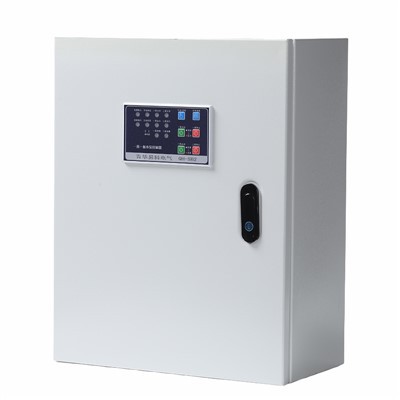
First off, let’s get one thing straight: “pressure resistance” for a metal control box isn’t a one-size-fits-all number. A box sitting on a shelf in a clean warehouse? Totally different from one bolted to the side of a bulldozer that’s bouncing over gravel all day, or one buried a foot underground in a sewage system. Most people think pressure is just “how much weight can it hold from the outside?” But nah, it’s also about internal pressure (like if a pipe leaks inside and builds up gas) and even environmental pressure—think high altitudes where the air is thinner, or places with tons of humidity that causes corrosion which weakens the metal over time.
Let’s start with the basics of what makes these boxes tough in the first place. We don’t cut corners on material here, ever. The standard for most of our industrial boxes is cold-rolled steel (CRS) that’s either 16-gauge or 14-gauge. For the uninitiated, gauge is the thickness—lower number = thicker metal, duh. 16-gauge is like, super sturdy for most regular stuff, but if you need something for heavy-duty work, we bump it up to 14-gauge, which is almost a quarter inch thick in some cases. We also use hot-dip galvanizing for the exterior finish 9 times out of 10, or powder coating if the customer wants it for UV resistance outdoors. That finish isn’t just for looks—it prevents rust that would eat away at the metal and make it way weaker over years of use.
Now, the actual pressure ratings. Let’s talk external pressure first because that’s what most folks mean when they ask. For standard wall-mount control boxes—like the ones you’d find on a CNC machine in a factory, or a HVAC system in a office building—we test those to handle up to 500 PSI (pounds per square inch) of static external pressure. Wait, hold on—static is key here. That’s pressure that’s evenly spread across the whole box, like if you set something heavy on top of it. If it’s impact pressure (like someone drops a wrench on it, or a small object hits it at speed), that number drops a bit to around 200 PSI for standard models. But for heavy-duty boxes—think the ones we make for mining, construction, or offshore rigs—we go way higher. Those are tested to 2,000 PSI of external pressure, because those environments are rough. I had a customer last year who used one of our heavy-duty boxes on a drill rig in West Virginia; they accidentally backed a dump truck into it (don’t ask, it was a weird work day) and the box didn’t even dent. That’s the kind of stuff we deal with.
But wait, there’s more. If you’re using a control box in a buried application—like underground wiring for a smart irrigation system, or a sewer pump control—pressure is way different because it’s hydrostatic pressure. That’s the pressure exerted by water surrounding the box, and it goes up the deeper you go. For a box buried 3 feet down, hydrostatic pressure is around 13 PSI, but go down 10 feet and that jumps to 43 PSI. Our standard underground boxes are rated for up to 100 feet of burial, which is 433 PSI of hydrostatic pressure. We’ve had customers bury them in wet soil near rivers, and they’ve held up for 7+ years with zero issues. If you need it deeper than that, no problem—we can customize the thickness of the metal and the gaskets to handle way more, up to 5,000 feet deep for offshore subsea stuff. That’s some next-level pressure, but we’ve got the gear to test that in our in-house lab, so we don’t just guess.
Internal pressure is another big one that a lot of suppliers forget to mention. If the box is protecting electrical components, and something inside goes wrong—like a short circuit that builds up gas, or a pipe leaking and releasing moisture—you don’t want the box to explode, right? We test our boxes to handle internal pressure up to 15 PSI, which is way higher than what almost any electrical component would generate under normal (or even slightly faulty) conditions. We also use EPDM rubber gaskets on all the seams and lids, not the cheap foam gaskets you’ll find on some budget boxes. Those gaskets are resistant to extreme temperatures, oil, and chemicals, so they keep pressure contained inside or outside, depending on what you need. I once had a customer call me panicking because a pipe under their control box burst, and they thought the box would blow. It didn’t—because the gaskets and the metal held the 12 PSI of pressure from the water in, and the components inside were totally unharmed. That’s the stuff that keeps customers coming back.
Now, let’s talk about the things that actually make a metal control box’s pressure resistance worse over time, because that’s a mistake I see a lot of people make. Corrosion is the big one. If you stick a regular ungalvanized steel box near a saltwater coast, or a chemical plant, it’ll start rusting within a year, and that rust eats into the metal, making it way thinner and less able to handle pressure. We always recommend either hot-dip galvanizing or powder coating for outdoor or harsh environment use, because those finishes act as a barrier between the metal and the elements. I had a customer in Florida who bought our standard galvanized boxes 8 years ago for a marina; they’re still going strong, no rust, no dents, even though they’re exposed to salt air 24/7. If he’d bought a cheap imported box from Alibaba, he would’ve needed to replace them 3 years ago, easy.
Another thing: installation. A box is only as strong as how you mount it. If you just screw it to a flimsy wall panel without reinforcing it, the pressure from inside or outside will flex the wall, which can crack the seams or damage the box. We always include mounting brackets with every box, and we send installation guidelines that tell you to reinforce surfaces if needed. Even for buried boxes, you can’t just toss it in a hole and cover it—you need to make sure the soil is compacted evenly around it, so there’s no uneven pressure pushing on one side. I’ve seen customers mess that up, and their box cracked after 6 months because the soil shifted and put too much pressure on one edge. It’s not the box’s fault, it’s installation—so we always tell our customers to follow the guidelines, or we can send a tech to help if it’s a big job.
Wait, let’s also clear up a myth I hear all the time: people think aluminum control boxes are more pressure-resistant than steel ones. Nope, not even close. Aluminum is lighter, which is good for some applications, but it’s softer and has a lower tensile strength—around 276 MPa (megapascals) for 6061 aluminum, vs. 350 MPa for cold-rolled steel. That means steel can handle more pressure before it deforms or breaks. The only time aluminum makes sense is if you need super light boxes for something like aerospace or portable equipment, but for pressure resistance, steel is always better. I tell every customer that: if pressure is a concern, go steel, no exceptions. We do make aluminum boxes too, but only for when weight is the main factor, not pressure.
Now, what about custom stuff? Not all applications are standard, right? Some customers need a control box that can handle 10,000 PSI for something like a hydroponic system with high-pressure pumps, or a box that can handle -40°F to 180°F for outdoor use in Alaska or Arizona. We don’t just have a set of pre-made ratings—we work with customers to adjust everything from metal gauge to gasket material to seam design. For example, last year we made a custom box for a customer who uses it in a high-pressure water jet cutting machine—they needed it to handle 8,000 PSI of internal pressure, so we used 10-gauge steel, reinforced the seams with welding instead of just screws, and used a special high-pressure gasket. They’ve been using it for a year, no issues, and they just ordered 15 more. That’s the kind of flexibility we have as a small, family-run supplier—we don’t just push one-size-fits-all boxes.
Let me wrap this up with a quick reality check: no control box is indestructible. Even our heavy-duty ones won’t handle a direct hit from a wrecking ball, but they’re built to handle the pressure of real-world industrial use, and that’s what matters. The key is to match the box’s rating to your actual environment, not just grab the cheapest one you can find.

If you’re in the market for a metal control box and want to make sure it’s pressure-rated for your job—whether that’s a standard wall-mount, a buried underground unit, or a custom heavy-duty box—hit me up. I don’t do pushy sales stuff; I’ll ask you about your application, the environment it’s going in, any pressure-related demands, and help you pick the right box, or customize it if needed. No hassle, no fine print, just straight talk about what works.
Metal Distribution Cabinet References
- American Society of Mechanical Engineers (ASME). (2021). Pressure Vessels and Control Enclosures: Design and Testing Standards. ASME International.
- Steel Manufacturers Association. (2022). Cold-Rolled Steel Properties for Industrial Enclosure Applications. SMA Technical Report Series.
- National Electrical Manufacturers Association (NEMA). (2020). Enclosure Testing Requirements for Environmental and Pressure Resistance. NEMA Standards Publication 250.
- Offshore Technology Conference (OTC). (2019). Subsea Control Enclosure Pressure Rating Guidelines. OTC Paper 29214.
Shandong Qinghua Yike Electric Co., Ltd.
As one of the most experienced metal control box manufacturers in China, we also support customized service. We warmly welcome you to buy durable metal control box for sale here from our factory. If you have any enquiry about cooperation, please feel free to email us.
Address: No. 378 Taozhuang Village, Zaoyuan Town, Lanshan District, Linyi City, Shandong Province
E-mail: admin@sd-qhyk.com
WebSite: https://www.qhecobox.com/
