If you’ve ever walked into a heat treatment kiln operation, you’ve probably heard two common questions from shop floor teams: “How consistent is the temp when we’re running parts?” and “Why do some batches come out with uneven hardness, even when we programmed the same setpoint?” As a heat treatment kiln supplier, I get these questions all the time—because temperature stability isn’t just a “nice to have” for our customers, it’s the whole point of what we do. Let’s break this down in plain talk, no jargon overload, so you get exactly what stability means for your kiln and parts. Heat Treatment Kiln
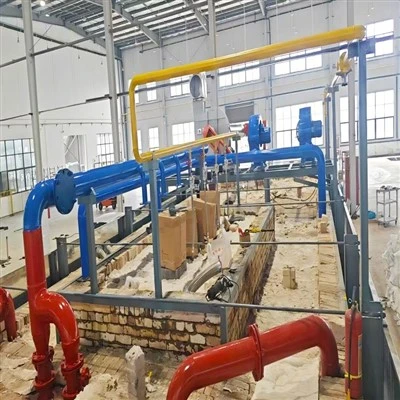
First, let’s define what we’re actually measuring when we say “temperature stability.” It’s not just a number on a screen that sticks to a setpoint. For a kiln, stability is how little the actual inside temp deviates from your target, both over short periods (like minutes) and across the whole load, regardless of where the parts sit. I’ve seen too many new customers mix up “the display says 1200°F” with “every part in the kiln is at 1200°F” — that’s a mistake. For example, if you’re hardening steel, a 20°F swing over 10 minutes can turn a perfectly tempered part into a reject. Even small variations lead to inconsistent grain structure, uneven warping, or parts that don’t meet spec for things like tensile strength.
Now, why does stability matter so much across different heat treatment processes? Let’s run through a few common ones to make it real. For annealing, where you’re softening metal to make it easier to machine, stability ensures the entire load cools at the same rate — so you don’t end up with some parts too soft and others too hard, wasting material and time. For brazing, even a 10°F difference between the top and bottom of the kiln can cause braze joints to fail because the filler metal melts unevenly. For powder coating cure, stability means no spots that under-cure (chipped finish) or over-cure (brittle, discolored parts) — stuff that makes your customers send the parts back. Even for more niche processes like sintering ceramics, temp swings can cause shrinkage rates to vary, leading to parts that don’t fit into their end products.
Let’s get into the factors that mess with a kiln’s stability, because if you’re operating one, you can control most of these. First, burner or heating element calibration — this is the #1 thing we see go wrong for older kilns. If your heating elements are worn out, or burners are misaligned, they’ll cycle on and off more than they need to, causing big temp swings. I’ve had a customer call us last year because their 5-year-old kiln was having 40°F swings during a normalize cycle; turns out the elements had a broken coil, so it couldn’t hold consistent heat when the load was inside. Then there’s load size and placement. If you’re cramming too many parts into the kiln, or stacking them so air can’t circulate, you’ll have cold spots near the bottom or between thick parts. We tell all our customers: leave at least 6 inches of space between parts, and make sure circulation fans are sized right for the load volume. A lot of people skimp on fan size to save money upfront, but that kills stability long-term.
Another big one is kiln insulation. If your refractory lining is cracked, or it’s worn out from years of use, heat leaks out, so the heating system has to work harder to hit setpoint — leading to cycling and instability. We replace insulation for customers all the time, and the difference is night and day. I remember a job last year where a customer’s 20-year-old kiln had a 75°F difference between the walls and the center of the load; after re-lining the back insulation, that gap dropped to less than 10°F. Also, environment around the kiln: if it’s sitting in a drafty warehouse, or the loading door is left open too long, temp drops fast. We recommend adding door seals and even small draft shields for outdoor kilns if that’s where you’re operating.
Wait, let’s talk about measurement accuracy too, because that ties directly to stability. A kiln can heat evenly, but if your thermocouples are old, dirty, or placed in the wrong spot, the display will show a wrong temp, so you think stability is off when it’s not. We calibrate all thermocouples for our kilns before shipping, but we tell customers to check them every 6 months. I’ve seen cases where a thermocouple was covered in grime, reading 50°F lower than actual — so the kiln cranked up, overheated parts, and ruined a $10k batch of titanium. That’s a preventable mistake that messes with everyone’s numbers.
Now, how do we measure stability, so you know what to look for when you’re evaluating a kiln, or checking your existing one? The standard we use for most industrial kilns is the variation in temperature over a 1-hour period, and across 3 to 5 points in the load. For example, a “stable” kiln for heat treatment should have less than ±5°F variation over 1 hour, and less than ±10°F across all load points. Some specialty processes (like aerospace heat treatment) need even tighter, like ±2°F, but for most general industrial jobs, that ±5 to ±10 range is what you’re targeting. When we test our kilns before delivery, we put multiple data loggers all over the load — top, bottom, left, right, center — and run a full cycle. If those loggers don’t all stay within the target range, the kiln doesn’t leave our facility. That’s non-negotiable for us.
Let’s get practical: what happens if stability is bad, beyond just part rejects? I talked to a customer last quarter who was losing about 15% of his steel batches because of inconsistent quenching temps, all because his old kiln had a 30°F swing. That’s $2k a week in waste, plus overtime to rework parts. On top of that, if you’re shipping parts that don’t meet spec, you get returns, damage to your reputation, and even compliance issues if you’re making parts for regulated industries like automotive or medical. So stability isn’t just a “quality” thing — it’s a bottom line thing.
Now, if you’re in the market for a new kiln, or looking to upgrade your current one, what should you ask a supplier about temp stability? Don’t just ask “how stable is it” — ask for hard numbers. Ask for the variation across load points, over time, and ask if they can provide test data from factory acceptance testing. Also, ask about the control system: modern kilns use PID (Proportional-Integral-Derivative) controllers, which adjust heating gradually instead of cycling on and off sharply. Old ON/OFF controllers cause big swings, so a PID system is a must for good stability. We use advanced PID with auto-tune on all our kilns, which means the controller learns your load’s behavior and adjusts heat in real time — no more overheating or underheating.
Wait, what about common myths I hear all the time? One is “bigger kilns are less stable.” That’s not true — we have customers with 10ft wide kilns that have the same temp variation as our small 2ft lab kilns, because we size the circulation fans and heating elements to match the volume. Another myth is “you get what you pay for” — which is half true, but not always. Some cheap kiln brands cut corners on insulation or fan size, but some mid-range options from reputable suppliers (like us) give you the stability you need without the premium price of aerospace-grade equipment. It’s about matching the kiln to your process, not just buying the most expensive one.
For customers with existing kilns, quick fixes to improve stability without a full rebuild: first, clean or replace worn heating elements. Second, make sure your load placement is optimized — no cramming parts, leave space for air flow. Third, calibrate your thermocouples regularly, and place them in the center of the load, not near the door or walls where temp changes fast. Fourth, add new insulation if your lining is cracked or worn. We’ve done these quick fixes for dozens of customers, and most saw a 50% drop in temp variation in a week, no big investment needed.
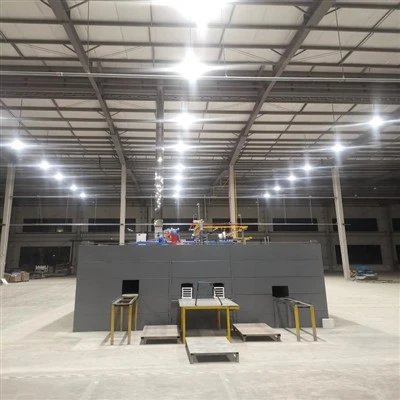
At the end of the day, temperature stability is the foundation of good heat treatment. It’s not something you can guess — it’s something you test, measure, and maintain. If your kiln is running consistently, your parts are going to be higher quality, you’ll have less waste, and you’ll keep your customers happy. If you’re struggling with uneven parts, high reject rates, or just want to upgrade to a kiln that holds tight temps every time, don’t hesitate to reach out to discuss what would work for your operation. We’ve helped everything from small job shops to large aerospace facilities get the stability they need, so let’s talk through your specific needs.
Mobile Energy Saving Rotary Kiln References
- ASM International. (2019). Heat Treater’s Guide: Practices and Procedures for Iron and Steels. ASM International.
- American Industrial Heating Association. (2021). Industrial Furnace Temperature Stability: Best Practices and Performance Metrics. AIH White Paper.
- Campbell, J. (2020). Kiln Design and Thermal Uniformity for Industrial Heat Treatment. Journal of Manufacturing Processes, Vol. 56, pp. 1245-1252.
Henan Yaxin Kiln Co., Ltd.
Henan Yaxin Kiln Co., Ltd. is one of the most professional heat treatment kiln manufacturers and suppliers in China. With abundant experience, we warmly welcome you to buy high quality heat treatment kiln with the latest design from our factory. Good service and punctual delivery are available.
Address: Jixian Industrial Zone, Shangqiu City, Henan Province
E-mail: 1543563178@qq.com
WebSite: https://www.hnyxkiln.com/
