Hey there! I’m working as a supplier for pipe clamps. And one question that comes up a lot is, "Can pipe clamps be used in a chemical-resistant environment?" Well, let’s dig into this topic together. Pipe Clamp
First off, what exactly do we mean by a chemical-resistant environment? These are places where pipes are exposed to all sorts of chemicals, like in chemical factories, wastewater treatment plants, and even some food processing facilities. Chemicals can be really harsh. They can corrode materials over time, weaken structures, and if the pipe clamps fail, it can lead to all kinds of problems, like leaks or even system shutdowns. So, it’s super important to know if our pipe clamps can handle these tough conditions.
Let’s talk about the materials of pipe clamps. We’ve got a few common ones out there. The first is carbon steel. It’s a strong and relatively cheap option. But here’s the deal with carbon steel. It’s not very chemical-resistant. In a chemical environment, it’ll quickly start to rust. The chemicals eat away at the steel, creating these little pits and holes. And as this corrosion progresses, the clamp loses its strength. You might start to notice that the clamp can’t hold the pipe as tightly anymore, and that’s a recipe for trouble. So, in most chemical-resistant environments, carbon steel pipe clamps are a no-go.
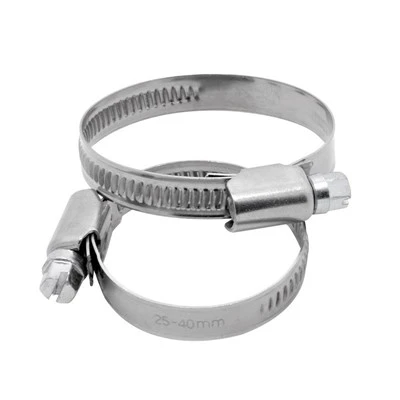
Then there’s stainless steel. This is a much better option when it comes to chemical resistance. Stainless steel has a chromium oxide layer on its surface. This layer acts as a barrier, protecting the steel underneath from the chemicals. Different grades of stainless steel have different levels of chemical resistance. For example, 304 stainless steel is pretty good for general chemical environments. It can handle mild acids and alkalis. But if you’re dealing with really strong chemicals, like concentrated sulfuric acid or hydrochloric acid, 316 stainless steel is a better choice. It has more molybdenum in it, which gives it extra resistance to pitting and crevice corrosion in harsh chemical settings.
Another material we use is plastic. Plastic pipe clamps, like those made from polypropylene or PVC, are also popular in chemical environments. They have some great advantages. For one, they’re lightweight, which makes them easier to install. And they’re inherently corrosion-resistant. Most chemicals don’t have much of an effect on them. However, they do have their limits. Plastic can get brittle over time, especially if it’s exposed to high temperatures or UV light. So, in environments where there’s a lot of heat or sunlight, you’ve got to be careful with plastic pipe clamps.
Now, I want to share some real-life examples. A few months ago, we had a customer from a small chemical lab. They were using carbon steel pipe clamps in a setup where they were dealing with some mild acidic solutions. After just a few weeks, they started to notice rust on the clamps. And the pipes were starting to loosen up. We suggested they switch to 304 stainless steel pipe clamps. Once they made the change, the problem was solved. The new clamps held up well, and there was no more rust or loosening.
On the other hand, we also had a client in a food processing plant. They were using plastic pipe clamps in an area where the pipes were exposed to some cleaning agents. Since the environment wasn’t too harsh in terms of temperature and chemicals, the plastic clamps worked great. They were easy to install, and they lasted a long time without any signs of damage.
But, it’s not just about the material. The design of the pipe clamp also matters. A well-designed clamp will distribute the load evenly around the pipe. This means it can hold the pipe more securely, even in a chemical environment. For example, some of our clamps have a smooth inner surface. This reduces the chance of the chemicals getting trapped between the clamp and the pipe, which could lead to corrosion. And we also have clamps with adjustable features. This allows the user to tighten or loosen the clamp as needed, depending on how the pipe expands or contracts due to temperature changes or chemical reactions.
So, can pipe clamps be used in a chemical-resistant environment? The answer is yes, but it depends on a few things. You’ve got to choose the right material based on the type of chemicals in the environment, the temperature, and the amount of sunlight. And you also need to have a good design that can handle the stress and keep the pipe secure.

If you’re in the market for pipe clamps for a chemical-resistant environment, don’t hesitate to reach out. We’ve got a wide range of options, and our team can help you pick the best one for your specific needs. Whether it’s stainless steel clamps for a harsh chemical factory or plastic clamps for a more gentle food processing setting, we’ve got you covered. We’re here to make sure your pipes stay in place and your operations run smoothly. Just drop us a message, and let’s have a chat about your requirements.
Hose Clamp References:
- "Materials Science for Engineers" – A textbook that covers different materials and their properties.
- Industry reports on chemical processing and pipe systems.
Dongtai Chuanqianzhou Stainless Steel Products Co., Ltd.
As one of the most professional pipe clamp manufacturers and suppliers in China, we also support customized service. Welcome to buy durable pipe clamp made in China here and get pricelist from our factory. For price consultation, contact us.
Address: No. 168 Huinan Throat Hoop, North of Fengshou River Bridge, Shiyan Town, Dongtai City, Yancheng City, Jiangsu Province
E-mail: gu19910218@163.com
WebSite: https://www.hnanclamp.com/
