Automated farming equipment has made significant strides in recent years, revolutionizing the agricultural industry. As a supplier of automated farming equipment, I am often asked if our technology can be used for all types of crops. This blog post aims to explore this question in depth, examining the capabilities and limitations of automated farming equipment across different crop varieties. Automated Farming Equipment
The Advantages of Automated Farming Equipment
Before delving into the compatibility of automated farming equipment with various crops, it’s important to understand the general advantages of this technology. Automated farming equipment offers increased efficiency, precision, and productivity. It can perform tasks such as planting, watering, fertilizing, and harvesting with greater accuracy and speed than traditional manual labor. This not only saves time and labor costs but also reduces the risk of human error, leading to higher crop yields and better quality produce.
Automated systems can be programmed to monitor and adjust environmental conditions such as temperature, humidity, and light levels, ensuring optimal growing conditions for crops. Additionally, these systems can collect and analyze data on crop growth, soil health, and weather patterns, providing farmers with valuable insights to make informed decisions about their farming practices.
Compatibility with Different Types of Crops
Row Crops
Row crops such as corn, wheat, soybeans, and cotton are well-suited for automated farming equipment. These crops are typically planted in straight rows, making it easier for machines to navigate and perform tasks such as planting, cultivating, and harvesting. Automated planters can precisely space seeds at the correct depth and distance, ensuring uniform germination and growth. Harvesters equipped with sensors and GPS technology can efficiently cut and collect the crops, reducing waste and maximizing yields.
Vegetables and Fruits
Many vegetable and fruit crops can also benefit from automated farming equipment. For example, robotic harvesters have been developed to pick tomatoes, strawberries, and other delicate fruits without damaging them. These robots use computer vision and machine learning algorithms to identify ripe fruits and gently pick them from the plants. Automated irrigation systems can also be customized to meet the specific water requirements of different vegetable crops, ensuring optimal growth and water conservation.
However, some vegetables and fruits pose unique challenges for automation. Crops with irregular shapes or sizes, such as artichokes or asparagus, may be more difficult to harvest automatically. Additionally, crops that require careful handling, such as lettuce or spinach, may be prone to damage during automated harvesting. In these cases, farmers may need to rely on a combination of manual and automated labor to ensure the quality of the produce.
Specialty Crops
Specialty crops, such as herbs, flowers, and nuts, often have specific growing requirements and may not be as easily adaptable to automated farming equipment. These crops may require more delicate handling, precise environmental control, and specialized harvesting techniques. For example, some herbs are harvested by hand to preserve their flavor and aroma, while certain flowers may need to be cut at a specific stage of bloom.
However, there is still potential for automation in the specialty crop industry. For instance, automated greenhouse systems can be used to control the temperature, humidity, and light levels for growing herbs and flowers. Drones equipped with multi-spectral cameras can be used to monitor the health and growth of specialty crops, allowing farmers to detect and address issues early.
Challenges and Limitations
While automated farming equipment offers many benefits, there are also some challenges and limitations to consider. One of the main challenges is the high initial cost of purchasing and implementing automated systems. This can be a significant barrier for small-scale farmers or those with limited financial resources. Additionally, the maintenance and repair of automated equipment require specialized skills and knowledge, which may not be readily available in all areas.
Another challenge is the need for continuous innovation and improvement to keep up with the changing needs of the agricultural industry. New crop varieties, pests, and diseases are constantly emerging, and automated farming equipment must be able to adapt to these challenges. This requires ongoing research and development to improve the technology and ensure its effectiveness.
Future Outlook
Despite the challenges, the future of automated farming equipment looks promising. As technology continues to advance, we can expect to see more sophisticated and versatile automated systems that can be used for a wider range of crops. For example, the development of artificial intelligence and machine learning is enabling machines to learn and adapt to different farming conditions, making them more efficient and effective.
In addition, the integration of automated farming equipment with other technologies such as the Internet of Things (IoT) and precision agriculture is expected to further enhance the productivity and sustainability of the agricultural industry. By collecting and analyzing real-time data from sensors and drones, farmers can make more informed decisions about their farming practices, reducing waste and improving resource management.
Conclusion

In conclusion, while automated farming equipment cannot be used for all types of crops without some limitations, it has the potential to revolutionize the way we grow and harvest many crops. Row crops and many vegetables and fruits are well-suited for automation, and there is also growing potential for the use of automated systems in the specialty crop industry. However, to fully realize the benefits of automated farming equipment, we need to address the challenges and limitations, such as the high cost and the need for continuous innovation.
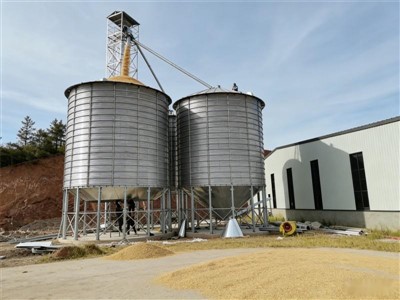
Silo If you are interested in exploring how our automated farming equipment can meet your specific agricultural needs, I encourage you to get in touch with us. Our team of experts can provide you with more information, guide you through the selection process, and help you implement the best solutions for your farm. Let’s work together to embrace the future of agriculture and achieve greater efficiency, productivity, and sustainability.
References
- Blackmore, S., & Bishop, C. T. (2006). Automation in agriculture and horticulture. Annual Review of Control, 30(1), 3-14.
- Gill, K. S., & Singh, M. (2013). Precision farming: Concepts and applications. Agricultural Reviews, 34(1), 63-74.
- Kuang, H., Jin, Z., & Yao, D. (2018). Agricultural robot for intelligent weed management: A review. Computers and Electronics in Agriculture, 146, 102-113.
- Tilman, D., Balzer, C., Hill, J., & Befort, B. L. (2011). Global food demand and the sustainable intensification of agriculture. Proceedings of the National Academy of Sciences, 108(50), 20260-20264.
Henan Oumu Intelligent Storage Equipment Co., Ltd.
As one of the most professional automated farming equipment manufacturers and suppliers in China, we’re featured by quality products and good service. Please rest assured to buy customized automated farming equipment made in China here from our factory. For quotation, contact us now.
Address: No. 681, Xinzhong Avenue, Hongqi District, Xinxiang City, Henan Province
E-mail: luna@oumu-silo.com
WebSite: https://www.oumu-silo.com/
