Alright, folks! As a supplier of Fluid Film Thrust Bearings, I’ve been dealing with these amazing pieces of machinery for ages, and one question that pops up a lot is about the effect of bearing preload on fluid film thrust bearings. So, let’s dive right in and have a good old chat about it. Fluid Film Thrust Bearings
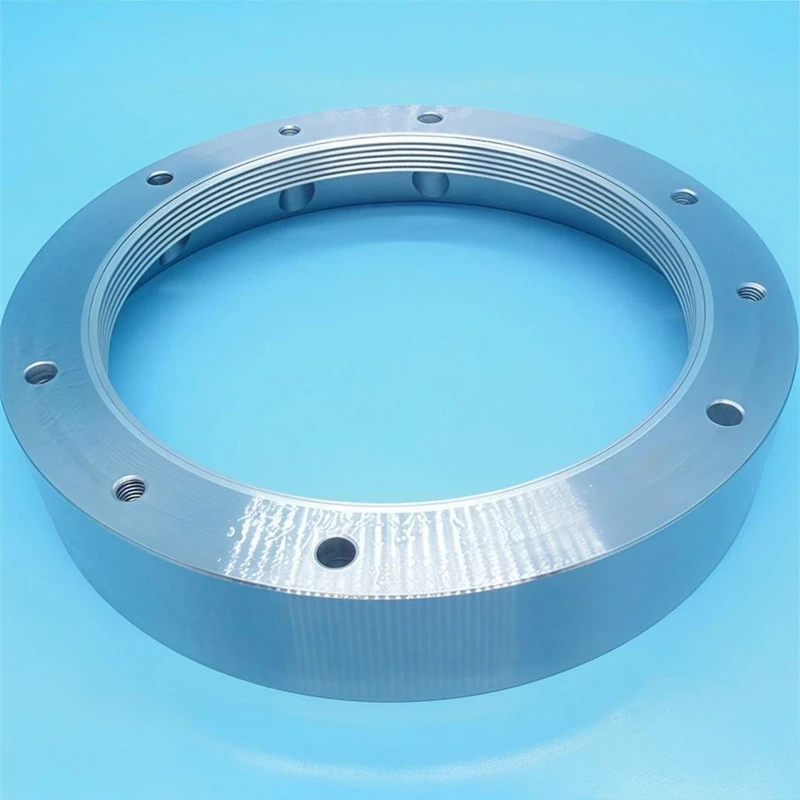
First off, what exactly is bearing preload? Well, preload is like giving the bearing a little nudge or a head – start. It’s the amount of force applied to the bearing components before the external load is even put on it. You can think of it as tightening a spring a bit so that it can better handle the stress later.
Now, when it comes to fluid film thrust bearings, the effect of preload is multi – faceted. One of the most significant impacts is on the bearing’s stiffness. With a proper preload, the bearing becomes stiffer. A stiffer bearing is like a stronger athlete. It can resist deformation better when an external load is applied. This means that the bearing can maintain its shape and position more accurately, which is super important in applications where precision is key, like in high – end machine tools or aerospace engines.
Let’s say you’ve got a machine that needs to cut metal with extreme precision. A fluid film thrust bearing with the right preload will ensure that the cutting tool stays exactly where it’s supposed to be. Without preload, the bearing might wobble a bit under the heavy load of the cutting operation, leading to inaccurate cuts and a whole lot of frustration for the operator.
Another cool thing about preload in fluid film thrust bearings is its effect on lubrication. In these bearings, a thin film of fluid acts as a lubricant between the moving parts. When there’s preload, it helps to control the thickness of this fluid film. A well – controlled fluid film is crucial because it reduces friction and wear. Friction is like the enemy of any moving part. It can generate heat, which can damage the bearing over time. By maintaining an optimal fluid film thickness, preload helps to keep the friction in check, and that means a longer lifespan for the bearing.
I remember once, a customer came to me with a problem. Their fluid film thrust bearings were wearing out too quickly. After a bit of investigation, we found out that the preload was set too low. The fluid film was inconsistent, and as a result, there was a lot of metal – to – metal contact, causing excessive wear. Once we adjusted the preload to the right level, the bearings started performing like a charm, and the customer was over the moon.
Preload also has an impact on the dynamic performance of fluid film thrust bearings. It can improve the bearing’s ability to handle dynamic loads, which are loads that change in magnitude or direction over time. In applications like automotive transmissions or wind turbines, the bearings are constantly subjected to dynamic loads. A bearing with the proper preload can respond more effectively to these changing loads. It can adapt to the variations in speed and load without losing its stability.
On the flip side, if the preload is too high, it can cause some issues as well. Too much preload is like over – tightening a bolt. It can put excessive stress on the bearing components. This can lead to increased power consumption because the bearing has to work harder to overcome the extra resistance. It can also cause premature wear of the bearing surfaces. So, finding the right balance is crucial.
I usually tell my customers that setting the preload is a bit like tuning a musical instrument. You need to get it just right. If you’re off – key, the whole performance suffers. And in the world of fluid film thrust bearings, the "performance" is the smooth and efficient operation of the machinery that the bearings are a part of.
How do we determine the right preload? Well, there are a few methods. One common way is through calculation. We use mathematical models that take into account factors like the bearing type, the expected load, and the operating speed. But sometimes, these calculations are just a starting point. In real – world applications, we might need to make some adjustments based on the actual performance of the bearing. That’s where on – site testing comes in. We can use sensors to measure things like temperature, vibration, and load distribution. Based on the data we get, we can fine – tune the preload to optimize the bearing’s performance.
As a supplier of fluid film thrust bearings, I’m always here to help my customers with preload issues. Whether you’re a small business owner looking to upgrade your machinery or an engineer working on a large – scale project, I’ve got the expertise and the quality products to meet your needs.

If you’re in the market for fluid film thrust bearings and want to learn more about how preload can affect their performance, or if you need help choosing the right preload for your application, don’t hesitate to reach out. We can have a good chat, and I’ll do my best to provide you with the information and solutions you need. Let’s work together to ensure that your machinery runs smoothly and efficiently.
Fluid Film Thrust Bearings References:
- "Bearing Technology Handbook"
- "Fluid Film Lubrication Principles"
- Industry – specific technical papers on fluid film thrust bearings
Wenzhou Zhengbang Bearing Co., Ltd.
We are one of the most professional fluid film thrust bearings manufacturers and suppliers in China. With abundant experience, we warmly welcome you to buy customized fluid film thrust bearings at competitive price from our factory. If you have any enquiry about free sample, please feel free to email us.
Address: Units 1-1 and 3-1, Building 12, Yongxing Nanyuan Small and Micro Enterprise Startup Park, Binhai 2nd Road, Yongxing Subdistrict, Longwan District, Wenzhou City, Zhejiang Province.
E-mail: zbbearing@zbbearing.com
WebSite: https://www.zb-bearings.com/
