If you’ve ever stared at a pile of cutting mats on your workbench, wondering why some feel like a stack of bricks and others weigh barely enough to notice, you’re not alone. As a cutting mat pad supplier who’s talked to hundreds of crafters, makers, and even professional quilters over the years, this question comes up all the time. Most folks just grab the mat they think looks sturdy, but weight isn’t just a random number—there’s a solid science behind it, and it actually tells you a lot about how the mat will perform. Let’s break this down, no stuffy jargon, just real talk from someone who’s spent way too many hours moving mats around a warehouse. Cutting Mat Pad

First off, let’s get one thing straight: “typical cutting mat pad” isn’t a one-size-fits-all thing. You’ve got tiny 6×6 inch mats for paper crafts, full 24×36 inch ones for large fabric projects, and everything in between, so size is the biggest variable here. But even when you narrow it down to the same dimensions, weight can vary by a whole pound or more depending on what the mat is made of, what it’s designed for, and even extra features like non-slip backs or grid lines. Let’s start with the basics most people don’t think about: the core material.
90% of all cutting mats you’ll find (the good ones, anyway) are made from polyvinyl chloride, or PVC for short. That’s the same hard, flexible plastic that holds up to thousands of cuts without leaving permanent holes—way better than cheap foam or flimsy vinyl that tears after a few uses. PVC has a specific gravity of about 1.3 grams per cubic centimeter, which just means it’s denser than water, so a thicker mat will weigh more than a thinner one, all else equal. Most standard mats are between 1.5mm and 3mm thick. The thin ones (1.5mm) are usually the cheap ones you pick up at a craft store for $5, while the heavy-duty ones go up to 3mm.
Let’s do some quick math to make this relatable. Take a common medium-sized mat: 18×24 inches. That’s a go-to for quilters, sewers, and people who do medium-sized paper crafts. Convert that to centimeters, and it’s about 45.7cm x 61cm. A 1.5mm (0.15cm) thick mat of pure PVC would weigh around 45.7 * 61 * 0.15 * 1.3. Let’s calculate that: that’s roughly 542 grams, or about 1.2 pounds. A 3mm thick version would double that, to around 1.08kg, or almost 2.4 pounds. Wait, that’s a huge difference for the same size, right? So why would you pick one over the other?
Here’s where the rubber meets the road (pun totally intended): weight isn’t just about carrying it to your craft table. A mat that’s too light will slide around on your desk while you’re cutting, which is a nightmare. I’ve had a customer tell me they ruined a whole set of quilt blocks because their $10 light mat shifted mid-cut and their fabric went crooked. That’s why most serious makers prefer a mid-weight mat for everyday use. The typical 18×24 inch cutting mat that’s popular with hobbyists and small businesses? It clocks in at around 1.8 to 2.2 pounds, right in between those thin cheap mats and the super heavy-duty ones. That’s heavy enough to stay put, but not so heavy that you have to use two hands to lift it when you’re done crafting.
Now let’s talk about the big ones. The full-size 24×36 inch mats that professional sewers use? Those are way heavier. A standard mid-weight 24×36 mat is around 3 to 3.5 pounds. The heavy-duty ones, designed for industrial use or people who cut thick leather or multiple layers of fabric? Those can push 5 pounds or more. I remember a contractor who works with upholstery coming to us once saying he’d been lifting his old 24×36 mat all day and his back was killing him. He switched to our mid-weight one and said it cut his lifting time in half, and it still didn’t slide while he was working. It’s all about matching the weight to what you need it for.
Wait, but not all mats are pure PVC. Some lower-end mats add stuff like foam cores to make them more flexible for rolling up, which adds a little weight but also makes them less durable long-term. We tested a few of those once, and after 100 cuts, the foam core started to compress, so the mat got wavy. Another thing: the backing. Some mats have a non-slip grip on the bottom, usually made of a thin rubber or thermoplastic elastomer (TPE). That adds maybe 0.2 to 0.3 pounds to a standard mat, but it’s worth every ounce for not having to tape your mat down every time you work. We stopped selling mats without non-slip backs a few years ago, and our customers haven’t complained yet. Even the grid lines—you know, the inch and centimeter marks—add a tiny bit of weight, but it’s negligible, like a few grams, so don’t stress over that.
Let’s get real about what’s “typical” for most people. If you’re a hobbyist who cuts paper, fabric, or thin vinyl at home, the mat you’ll reach for most is either 12×18 or 18×24 inches. A 12×18 inch mat will usually be between 1 and 1.5 pounds, and the 18×24 is 1.8 to 2.5 pounds. For reference, that’s about the weight of a small laptop (most 13-inch laptops are around 3 pounds, so a 2.2 pound mat is lighter than that) or a bag of apples. For crafters who work on big projects, like longarm quilters or people who do large sign making, the 24×36 or even 36×48 inch mats are standard, and those range from 3 to 5 pounds. That’s about the weight of a full bottle of water (a 1-liter bottle is 2.2 pounds, a 2-liter is 4.4 pounds, so a 5 pound mat is just a touch over a 2-liter bottle).
Now, why does weight even matter beyond just not sliding? If you’re storing your mat in a drawer, a lighter mat is easier to pull out and put away, but if it’s too light, it’ll get wrinkled if it’s not laid flat. We’ve had customers who roll their mats up for storage swear by lighter ones, but we always tell them to unroll them at least once a month to keep them flat. Heavier mats tend to lay flatter right out of the package, too—no more trying to press down on the edges while you cut because the mat is curling up from being stored rolled. That’s a huge time saver. I’ve had a lot of quilters tell me that a flat mat means they don’t have to re-measure their fabric every 10 minutes because they’re working on a wavy surface.
Another thing: durability. A denser, heavier mat isn’t always more durable, but it usually is. The cheap thin mats (under a pound for 18×24) will get scratches and grooves that never go away, and after a few months, those grooves make it hard to see your lines. The mid-weight mats we sell are dense enough that those scratches are minimal, and the grooves fade back almost completely when you pull the mat out into the sun for a little while (sunlight is actually a secret trick—small UV exposure makes PVC bounce back to shape). The heavy-duty ones, over 3 pounds for 18×24, are built to last years, even with daily use cutting thick materials like leather or multiple layers of denim. We’ve had a few professional seamstresses tell us our heavy-duty mats have lasted them 5+ years, which is way longer than the $20 mats they were buying before.
Wait, let’s clear up a common myth: more weight doesn’t always mean better quality, but it usually means better construction. Some brands add extra plastic to make their mats feel heavy, but they cut corners on the material quality, so the mat gets brittle after a year. That’s why as a supplier, we test every batch of mats we get. We check the weight, the thickness, and how well they hold up to repeated cuts. We found that the sweet spot for a durable, all-purpose cutting mat is between 1.8 and 2.2 pounds for 18×24, and 3 to 3.5 pounds for 24×36. That’s the sweet spot where you get the non-slip, flat surface without the bulk of a super heavy mat that’s hard to move around.
I once had a customer who ran a small craft studio come to us because she was tired of her students complaining about the mats being too heavy to lift. She was buying a cheaper brand that was 2.5 pounds for 18×24, which was a pound heavier than our mid-weight ones, and her students were always leaving them on tables or straining their arms carrying them. She switched to our 2 pound mats, and said her students’ feedback went from “these are too heavy” to “these are perfect, they don’t slide and they’re easy to move.” That’s when we realized that weight is super personal—there’s no universal “best” weight, but there is a typical weight that works for most people.
Let’s also talk about niche mats. If you’re looking for a mat for small projects, like scrapbooking or card making, the tiny 6×6 or 9×12 inch mats are usually 0.25 to 0.75 pounds. Those are light enough to toss in your craft bag, which is perfect for taking to craft nights or classes. Then there are specialty mats, like those for cutting glass or metal craft materials, which are made from thicker, denser PVC so they can handle sharper blades without getting damaged. Those can be 10-15% heavier than standard mats of the same size, so keep that in mind if you’re working with more heavy-duty materials.
So, to wrap this up, what’s the typical weight of a cutting mat pad? If you’re talking about the standard mat most people use for home crafts and small projects, that’s 1 to 2.5 pounds depending on size: 6×6 is ~0.25 lbs, 12×18 is ~1.2 lbs, 18×24 is ~2 lbs, 24×36 is ~3.2 lbs. For heavy-duty professional use, it can go up to 5 pounds or more, but that’s not what most folks would call “typical.”
At the end of the day, the best cutting mat for you is one that fits your workflow, not just the weight number. If you’re a casual crafter who only cuts a few times a month, a lighter $10 mat will work fine, even if it slides a little. But if you’re someone who cuts every week, or you’re using your mat for big projects, that extra half-pound or pound of a sturdy mid-weight mat will save you so much frustration. No more crooked cuts, no more sliding mats, no more ruining fabric or paper because your mat isn’t up to the task.
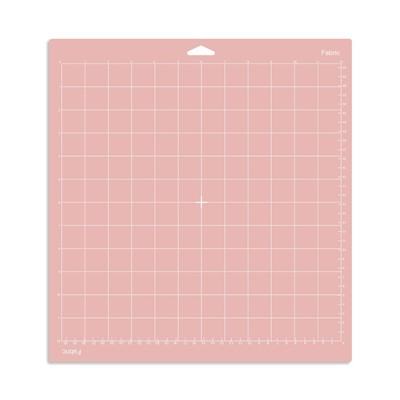
If you’re in the market for a new cutting mat, or you want to test the difference in weight and quality for yourself, we’ve got a range of sizes and weights to fit every need. Whether you’re a hobbyist just starting out or a small business looking for reliable mats for your team, we can help you find the right fit for your projects. Don’t hesitate to reach out to our team to chat more about what you need—we’re here to answer questions, share tips, and make sure you get a mat that works for you.
Cutting Mat Pad References:
- "Polyvinyl Chloride (PVC) Properties and Applications", Plastic Industry Association, 2022
- "Cutting Mat Durability and Performance Testing", Craft and Hobby Association, 2021
- "Workplace Ergonomics for Craft and Sewing Spaces", Occupational Safety and Health Administration, 2020
- "Thermoplastic Elastomers for Non-Slip Surfaces", Rubber and Plastics News, 2019
Dongguan Tensoa Technology Co., Ltd.
As one of the most professional cutting mat pad manufacturers in China, we’re featured by quality products and low price. Please rest assured to buy cheap cutting mat pad in stock here and get quotation from our factory. We also accept customized orders.
Address: Room 201, Building 2, No. 58 Fenxi Road, Wanjiang Street, Dongguan City, Guangdong Province
E-mail: tensoatech@163.com
WebSite: https://www.tensoatech.com/
