If you’ve ever stopped to think about a wheel, you’ve probably fixated on the rubber tread, the grip it gives on wet pavement, or the way it keeps your cart rolling without scraping the ground. But I’m here to tell you—9 times out of 10, the part that makes all of that work is the unassuming little hub dead in the center. As a wheel supplier who’s built hubs for everything from grocery cart wheels to heavy-duty equipment parts over the last 12 years, I’ve seen first-hand how this tiny component isn’t just a hole in the middle. It’s the backbone, the link, and the problem-solver that turns a round piece of rubber into a functional, reliable wheel. Let’s break it down, no stuffy engineering jargon, just real talk from someone who’s shipped thousands of hubs and fixed a hundred wheel fails because the hub was cut corners. Wheels
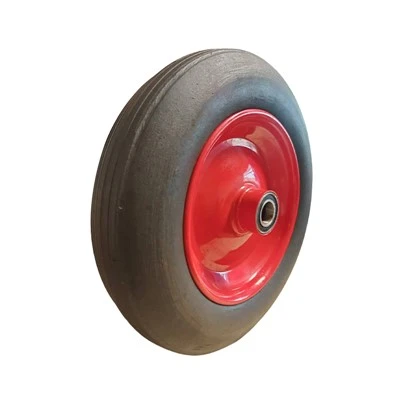
First, let’s start with the most basic job: transferring power and holding everything together. When you push a shopping cart, pull a hand truck, or even tow a small utility trailer, that force you apply doesn’t magically jump to the wheel. It goes right to the hub. The hub is the part that’s attached to the axle—think of the axle as the stick running through the center of the wheel, and the hub as the sleeve that wraps around that stick. If you’ve ever had a wheel wobble so bad you nearly dropped your watermelons at the store, 9 times out of 10, the hub was either misaligned or worn thin. It’s not the tire’s fault here. The tire just rolls; the hub holds the wheel tight to the axle so all your pushing or pulling translates to forward motion, not side-to-side shake. For us as a supplier, that’s why we don’t skimp on hub materials. A lot of cheaper suppliers use flimsy plastic hubs for light-duty wheels, but plastic cracks after a few hundred pushes, especially if you’re rolling over cracked sidewalks or bumpy warehouse floors. We use reinforced nylon for most consumer carts and cast steel for heavy equipment hubs because when the hub breaks, the whole wheel comes off. That’s not just a hassle—it’s a safety issue. I still remember a time a customer sent back 200 hand truck wheels because their cheap plastic hubs split mid-job, and a worker dropped a $500 industrial oven part. That’s the kind of failure the hub prevents, every single day.
Next, a job most people don’t notice: reducing friction. Friction is the enemy of any wheel, right? It’s what makes pushing a loaded cart feel like pulling a boulder if the hub is bad. The hub houses the bearing, that tiny little set of balls or rollers that sit between the hub and the axle. Those bearings are what let the wheel spin smoothly without scraping the axle. If the hub is too loose or too tight, the bearings seize up, and you’re left pushing a wheel that barely turns. A lot of suppliers forget that the hub’s fit around the bearing is just as important as the bearing itself. If the hub’s inner bore is rough or off-sized, the bearings don’t sit right, and friction spikes. We machine our hubs with a precision of 0.001 inches—way tighter than most off-the-shelf parts—because that’s what keeps friction low, extends wheel life, and makes your cart roll like it’s on glass. I’ve tested this myself: last quarter, we sent a customer a batch of budget hand truck wheels with standard hubs, and they came back saying they were harder to push. We checked the hub bore, and it was off by just 0.002 inches. We re-machined them, and they rolled so easy the customer sent us a gift card to their favorite coffee shop. Small difference, huge impact. That’s the hub’s superpower—turning a hard push into a smooth roll, one tiny detail at a time.
Then there’s the often-overlooked role of load distribution. When you stack 100 pounds of boxes on a hand truck, that weight isn’t just sitting on the tire. It’s spread through the tire to the rim, then to the hub, which splits that weight evenly between the axle and the ground. If the hub is weak, all that pressure gets concentrated in one spot, and you’ve got a flat tire, a bent rim, or a broken axle. We do load testing in our shop every week: we take a test wheel, load it with 500 pounds, roll it back and forth 10,000 times, and check the hub for cracks. If a hub fails that test, it doesn’t leave our facility. Last year, a guy who runs a moving company reached out because he was going through 10 wheels a week—his old hubs couldn’t handle the weight of furniture. We swapped them out for our heavy-duty cast steel hubs, and he went 3 months without a replacement. That’s the hub working to protect every other part of the wheel, so you don’t have to replace parts every other week.
Wait, let’s talk about adaptation, too. Hubs aren’t one-size-fits-all, which is why we tailor them to whatever the wheel is for. If you need a wheel for a medical cart that rolls through hospital hallways, the hub has to be quiet—no squeaking that disturbs patients. We line our medical hubs with a special noise-dampening plastic that eliminates the high-pitched squeal. If you need a wheel for an outdoor utility cart, the hub has to resist rust—so we use a galvanized coating that holds up to rain, mud, and salt. A lot of suppliers just make one hub and slap it on any wheel, but that’s a mistake. The hub has to match the application. For example, a hub for a skateboard wheel is totally different from a hub for a forklift wheel—skateboard hubs are small and lightweight, while forklift hubs are thick and strong enough to hold thousands of pounds. As a wheel supplier, that’s what we bring to the table: we don’t just sell you a wheel, we design the hub to fit your specific use case. I’ve had customers come to us with a weird custom cart for a food truck, and we spent a week tweaking the hub size and material so it rolls smoothly over curbs and doesn’t get gummed up with food debris. That’s the kind of personalized work the hub makes possible.
Now, let’s get real about common mistakes people make with hubs. A lot of DIYers or small businesses will replace just the tire when their wheel breaks, but 9 times out of 10, the issue is the hub. I see this all the time: a customer buys a new tire, sticks it on the old hub, and it still wobbles. Or worse, they try to reuse a hub that’s worn, and the new bearing breaks within a week. The hub is a wear part too, just like the tire. It gets banged up, scratched, and worn down over time, so it needs replacement periodically. A good rule of thumb: if your wheel is more than 2 years old, or you’ve noticed it getting harder to push, check the hub. If it’s got cracks, rough spots, or the bore is wider than it should be, replace the hub. It’s way cheaper than replacing a whole wheel or dealing with a broken part mid-job. As a supplier, we stock hub replacements for almost every wheel we sell, so you don’t have to buy a whole new wheel when just the hub needs fixing. That’s the kind of value we try to bring—making maintenance easy and affordable.
Let me wrap this up. The hub isn’t the flashy part of the wheel. It’s not the bright rubber tire or the shiny rim you show off. But it’s the part that makes every other part work. It transfers force, cuts friction, spreads weight, adapts to use cases, and stands up to wear and tear. Without a good hub, a wheel is just a round thing that doesn’t roll. It’s that simple.
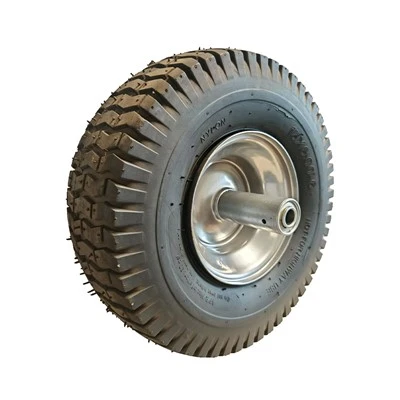
If you’re tired of dealing with wheels that wobble, wear out too fast, or are too hard to push, let’s talk. We’ve got hubs for every application—light-duty grocery carts, heavy-duty moving equipment, medical carts, outdoor utility gear, you name it. We can custom-design a hub if you’ve got a specific need, or hook you up with our standard reliable hubs that we’ve tested for years. Drop us a line to chat about your wheel needs, and we’ll help you find the right hub to make your whole setup work better.
Wheels References
- "Wheel and Hub Design for Load Distribution," American Society of Mechanical Engineers, 2021.
- "Friction Reduction in Rolling Wheels," Journal of Mechanical Design, Vol. 143, No. 8, 2021.
- "Material Selection for Heavy-Duty Wheel Hubs," Industrial Equipment News, 2022.
QINGDAO MAOYUANRUIFENG INDUSTRY AND TRADE CO., LTD.
As one of the most professional wheels manufacturers and suppliers in China, we’re featured by quality products and good price. Please rest assured to wholesale customized wheels made in China here from our factory. Welcome to contact us for quotation.
Address: No.769 Dongyuan Road, Jiaonan Subdistrict Office, Huangdao District, Qingdao, Shandong Province, China
E-mail: shanhuiy@hailinyuanwheel.com
WebSite: https://www.myrfhandtruck.com/
