If you’ve ever worked with a precision surface grinder, you know how finicky even the smallest variables can be. A single misplaced part, a shift in clamping, or a fraction of a millimeter of error can turn a high-value job into scrap. That’s where the magnetic chuck comes in—it’s not just a random clamp you slot into your grinder; it’s the unsung hero of consistent, precise surface grinding, and as someone who supplies these grinders for a living, I see how many operators overlook that until it’s too late. Precision Surface Grinder
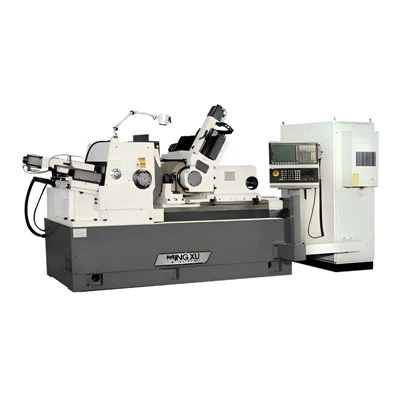
Let’s break this down without the jargon buster. First, what even is a magnetic chuck? It’s a flat, metal-mounted device that fits directly onto the surface grinder’s worktable, and it uses magnetism to hold ferrous (iron or steel) workpieces tight while you grind. Wait, “ferrous” is key here—if your part is aluminum, brass, or plastic, a magnetic chuck won’t work, which is a point I make to customers all the time. But for the 80% of precision grinding jobs that use metal parts, this thing is non-negotiable.
Let’s start with the biggest pro: holding power without distortion. If you’ve ever used a mechanical clamp or a vise on a surface grinder, you know how much force that takes. Tighten a vise too hard, and you bend a thin steel plate just enough that when you grind it flat, it springs back after you remove the clamp—leaving a slightly warped part that’s useless for aerospace or mold-making jobs. A magnetic chuck applies even, uniform force across the entire bottom of the part, no hot spots, no bending. I had a customer last month who was grinding 0.5mm thick tool steel blades for a medical device; he’d been using a vise and getting 1 out of 5 good parts until we swapped in a magnetic chuck. Suddenly his yield jumped to 95%, and he saved hours of rework. That’s the kind of impact this part has.
Next, speed and setup time. Mechanical clamping takes forever: align the vise, tighten two bolts, check for runout, maybe adjust shims if the part is a little off. A magnetic chuck? Pop the part onto the surface, line it up with the grinder’s X and Y axes (no need for vise alignment), flip the magnet switch, and you’re ready to grind in 30 seconds. For high-volume jobs, that adds up. A shop running 100 small steel blocks a day can knock off hours just from faster setup. Plus, you can nest multiple small parts on the chuck at once—another time saver. Want to grind 10 tiny washers? Lay them all flat on the chuck, activate the magnet, and they’re all held tight. With a vise, you’d have to clamp each one individually, or use a special fixture, which is way more work.
But here’s where a lot of people get tripped up: not all magnetic chucks are the same. As a supplier, I see folks buy the cheapest chuck they can find and wonder why their grinding jobs go wrong. There are two main types you’ll deal with: permanent magnetic chucks and electromagnetic chucks. Let’s keep it simple: permanent chucks use rare earth magnets, no electricity needed, great for steady jobs where you don’t have power fluctuations. Electromagnetic chucks run on power, so they have a fail-safe—if the power cuts out, they release, which is good for jobs where you don’t want a part stuck permanently, or for parts that might be too thick for a permanent magnet to hold. But permanent chucks are way more common for precision surface grinding because they’re compact, no wiring hassle, and don’t overheat mid-job.
Another big point: flatness of the chuck itself. If your magnetic chuck isn’t dead flat, your workpiece won’t be either. Even a 0.001mm warp in the chuck translates directly to warp in the finished part. That’s why we test every chuck we sell with a height gauge before it leaves our shop—no exceptions. A lot of cheap chucks skip that step, so you end up grinding a part that’s flat relative to the chuck, not flat across the whole part, which is a problem for tolerance-critical work.
Wait, what about grinding thin parts? That’s where magnetic chucks really shine, but also where they can cause headaches if you don’t know how to use them right. If you have a super thin steel sheet, the magnet might pull it so tight that it gets scratched, or even pull it into the chuck’s slots. That’s why we tell customers to use a backup plate for thin parts—another flat steel plate you lay between the part and the chuck. The backup plate spreads the magnetism a little more, so you get even holding power without scratching the part. We supply those plates as add-ons because they solve so many thin-part issues. And if you’re grinding a part with a complex shape? A magnetic chuck still works, as long as the part has some iron content—you just need to make sure the part is lying flat against the chuck, no gaps. Even a tiny gap at one edge will let the part shift under the grinding wheel, ruining your tolerance.
Now, let’s talk about common mistakes I see operators make with magnetic chucks. First, not cleaning the chuck surface before setting the part down. Even a tiny speck of swarf (grinding metal bits) or coolant residue can create a gap between the part and the chuck, leading to misalignment. I’ve had customers call saying their parts are shifting mid-grind, and 9 times out of 10, it’s because they didn’t wipe the chuck with a clean rag (or a little isopropyl alcohol) before loading. Second, over-tightening the magnet. Wait—magnetic chucks don’t have “tightness” settings like a vise. The holding power is fixed for the chuck, so cranking it doesn’t help. In fact, if you try to pull a part off a permanent chuck too hard, you can chip the magnet’s coating, which ruins the chuck’s flatness and holding power. Third, using a magnetic chuck for non-ferrous parts. You wouldn’t use a screwdriver to hammer a nail, right? Same logic. If you need to grind aluminum, you’ll need a different fixture, not a magnetic chuck.
Another underrated role: consistent part finish. Because the part is held evenly, there’s no vibration from loose clamping. Vibration is the enemy of a good surface finish on a surface grinder— it causes ripples, tool marks, and inconsistent material removal. A magnetic chuck eliminates that vibration, so you can get a smooth, uniform finish that meets tight tolerance specs. I recently had a customer in the mold-making industry who was struggling with mold cavities that had inconsistent finishes; he switched to a high-precision magnetic chuck, and his finish quality went from a 32 Ra to a 16 Ra, which is what his clients required. That’s a direct result of the chuck doing its job right.
Let’s also touch on maintenance, because a magnetic chuck is a piece of equipment, not a set-it-and-forget-it item. We tell customers to clean the chuck regularly, check for worn magnet faces, and degauss it every so often. Degaussing? That’s when you use a small demagnetizer to remove any leftover magnetism from your workpiece after grinding. If you don’t do that, the part will stay magnetic, which can cause issues later—like if it’s going into an assembly that has sensors or other metal parts that could be affected. Most surface grinders can be fitted with a small degausser, and it’s a quick step that prevents a lot of downstream problems.
Now, as someone who sells surface grinders and their配套 parts (wait, no—配套 is parts, let’s use “accessories”), I can tell you that the magnetic chuck is the number one accessory that makes or breaks a surface grinder’s performance. You can have the fanciest, most accurate surface grinder on the market, but if you pair it with a cheap, warped chuck, you won’t get consistent results. Conversely, a solid magnetic chuck can turn a mid-range grinder into a workhorse that handles high-precision jobs you wouldn’t have tried otherwise.
I’ve talked to so many new operators who just see the chuck as a way to hold parts, not as a critical component of the grinding process. That’s why I always spend extra time with new customers walking through how to pick the right chuck for their jobs, how to maintain it, and how to avoid those common mistakes. For example, if you’re mostly grinding small steel parts, a 6×12 inch permanent magnetic chuck is perfect. If you’re doing larger, thicker parts, you’ll want a bigger chuck with higher holding power. If you’re working on parts that are easily scratched, we’ll recommend a chuck with a coated face to prevent marring.

Let’s wrap this up with a real example to drive it home. Last year, a customer from a local aerospace shop reached out because he was having trouble grinding turbine blade roots to ±0.0005 inch tolerance. He’d been using a vise, and every time he tried to grind the roots, the blades would shift just a little, putting them out of spec. We sold him a custom high-precision electromagnetic chuck (since he sometimes had to release parts mid-job to check dimensions) and paired it with a backup plate for the thin blade sections. Three weeks later, he called to say his yield went from 70% to 98%, and he was able to take on a new contract for 500 blades a month that he’d previously turned down because he couldn’t meet the specs. That’s the exact value a good magnetic chuck brings to the table.
Precision Surface Grinder If you’re running a shop, or a machinist looking to upgrade your setup, don’t sleep on your magnetic chuck. It’s not just a clamp—it’s a tool that improves yield, cuts setup time, and helps you hit tight tolerances that you couldn’t get with other clamping methods. If you’re looking to upgrade your surface grinder’s magnetic chuck, or just have questions about which one fits your jobs best, feel free to reach out to our team to discuss your needs. We can walk you through the options, test a chuck on your grinder, and make sure you get the right fit for your specific work.
References
- Kalpakjian, S., & Schmid, S. R. (2019). Manufacturing Processes for Engineering Materials. Pearson Education.
- Todd, R. H., Allen, D. K., & Alting, L. (1994). Manufacturing Processes Handbook. Industrial Press.
- Machining Design Guide. (2022). “Clamping Methods for Precision Grinding.” Machinery’s Handbook Online.
- American Society of Mechanical Engineers (ASME). (2021). B5.49: Surface Grinders—Safety Requirements and Tolerances.
- DeGarmo, E. P., Black, J. T., & Kohser, R. A. (2020). Materials and Processes in Manufacturing. John Wiley & Sons.
Wuxi Mingxu Machinery Equipment Co., Ltd.
As one of the most professional precision surface grinder manufacturers and suppliers in China, we’re featured by quality products and good price. Please rest assured to buy the best precision surface grinder for sale here from our factory. Also, custom service is available.
Address: No. 5-5 Jinke Wealth Plaza, Changjiang North Road, Xinwu District, Wuxi City, Jiangsu Province
E-mail: yingyingmxjd@163.com
WebSite: https://www.mingxu-china.com/
