Hey there! If you’ve ever been deep in the water treatment game, you know white polyaluminium chloride (white PAC) is basically the unsung hero of getting murky water clear—whether it’s for a small community well, a municipal plant, or even a commercial food processing setup. But here’s the thing I get asked all the time, especially from new operators or folks just switching to white PAC: “What’s the actual dosage I need to use?” I’m not here to throw around fancy jargon like some textbook (been there, done that, stared at spreadsheets till my eyes crossed), so let’s break this down like we’re chatting over a coffee at the plant break room. White Polyaluminium Chloride
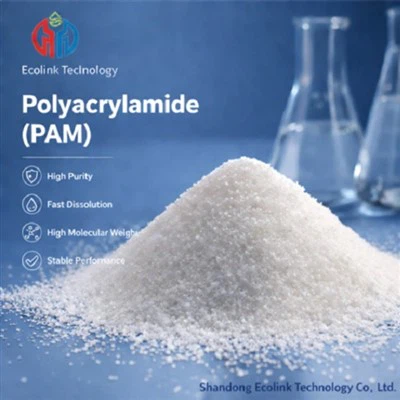
First, quick refresher on why white PAC is different from that yellow stuff you might’ve heard of. White PAC’s way purer—less heavy metals, lower insoluble content, so it’s the go-to when water’s for drinking or sensitive applications (like pharmaceutical manufacturing, y’know, where impurities can’t be tolerated). But that purity doesn’t mean one dosage fits all. Let’s start with the basics: dosage is measured in milligrams per liter (mg/L, or just ppm if you’re old school, which most operators are), and it’s not a number you pull out of thin air. It’s totally dependent on the water you’re treating—source water quality is everything here.
Let’s talk source water first because that’s the big variable. If you’re dealing with raw water from a clear mountain stream—low turbidity (like 5-10 NTU, NTU is nephelometric turbidity units, just think of it as how cloudy water is), low pH (around 6.5-7), low organic content? You’re gonna need less white PAC. Maybe 5-15 mg/L tops. But if you’re tapping into a river or reservoir after a heavy rain—sudden spike in turbidity (30-100 NTU or higher), higher pH, tons of dissolved organic matter (like leaves, algae, runoff from farms)? That’s where you might jump up to 15-30 mg/L. Wait, and if the water’s super low turbidity, like when it’s been filtered already but needs a final polish? I’ve seen operators use as little as 1-5 mg/L. That’s the range I tell folks to start with, but don’t stop there.
Now, pH is a game-changer here. White PAC works best when the water’s pH is between 5.5 and 8.5—way different from aluminum sulfate, which is finicky and needs pH 6-7. If your water’s too acidic (below 5.5), white PAC doesn’t hydrolyze properly, so it can’t clump up those contaminants (that’s called flocculation, by the way—clumping tiny particles into big ones that sink). If pH is above 8.5, you’ll get this leftover aluminum in the water, which is bad for drinking water standards. How does that affect dosage? If pH is on the lower end (5.5-6), you might need a touch more white PAC to get the floc going—maybe bump that first dose up by 2-3 mg/L. If pH’s on the higher side (8-8.5), you might need to adjust with a small dose of acid, but if you can’t, watch for over-dosing because it won’t work as well.
Wait, what about application type? That’s another big one I see people miss. Are you using white PAC for conventional drinking water treatment (coagulation before sedimentation and filtration)? Or for wastewater treatment (like treating industrial or municipal sewage)? Or even for ultrafiltration membrane pre-treatment (to keep membranes from clogging)? Each needs a different dose. For conventional drinking water, that’s usually 5-25 mg/L, like I said earlier. For wastewater, it’s higher—maybe 20-50 mg/L, because wastewater has more gunk (solids, chemicals, maybe grease). For membrane pre-treatment, it’s on the lower end, like 2-10 mg/L, because you just need to tweak the floc size so it doesn’t foul the membrane.
But hold up—this is all a starting point. You can’t just dump that number in and call it a day. I’ve seen new operators grab a generic range, add it to the tank, and end up with either cloudy water (under-dosage—too little floc, nothing sinks) or a bunch of slimy, hard-to-filter floc (over-dosage—too much PAC, excess aluminum that messes things up). That’s why jar tests are non-negotiable. If you’re not doing jar tests, you’re guessing, and that’s a fast way to waste product (which means extra costs) or ruin your water quality. Let me explain jar tests like it’s super simple: take 5 beakers of your raw water, add 5 different doses of white PAC—say 5, 10, 15, 20, 25 mg/L. Stir them fast for 1 minute (to mix the PAC in), stir slow for 10 minutes (to let floc form), then let them sit for 20. Pick the beaker where the water’s clearest, the floc is big and sinks fast, and there’s no leftover cloudiness or slimy stuff. That’s your dosage. I tell every customer to do this, no exceptions. Even when I send them a sample to test, I walk them through jar tests step by step, because water changes every day—rain, temperature, algae growth—so your dosage will too.
Another thing: temperature. If you’re treating cold water, like in the winter when surface water is 40°F (4°C) or lower, floc forms slower and smaller. So you’ll need a slightly higher dosage—maybe 2-5 mg/L more than you’d use in 70°F (21°C) water. I learned that the hard way a few years back; a client in a northern town tried their summer dose in January, ended up with water so cloudy they had to re-treat. Oops. Also, if the water’s super warm, like in summer when algae is blooming, you might need to adjust for that organic load, which ties back to source water quality.
Wait, and don’t forget about mix ratios sometimes? No, wait—this is white PAC, so you’re dissolving it first, right? You can’t just add the powder straight to the tank; it needs to be a 1-5% solution (10 grams of white PAC per liter of water, up to 50 grams, max). If your solution’s too concentrated, it can cause “over-dosing spots” where the PAC doesn’t mix evenly, leading to bad floc. That’s a quick tip that saves a lot of headaches.
Now, let’s talk numbers from real stuff—like regulatory standards, because we care about safe water. For drinking water, the WHO and EPA have limits on aluminum residual (below 0.2 mg/L, by the way). So over-dosing white PAC will make that residual go over, which is a no-go. That’s why jar tests are so key—you can check the aluminum level after treatment to make sure you’re not crossing that line. For industrial wastewater, limits are different, but still, over-dosing is a waste and can cause other issues (like increased sludge volume, which means more cost to dispose of sludge).
I get that as a supplier, I’m supposed to push my product, but here’s the honest truth: white PAC isn’t a one-size-fits-all chemical, and I’m not gonna tell you “use 10 mg/L and you’re set forever.” The best thing I can do as a supplier is give you the tools to figure it out, plus the right product (pure, consistent white PAC, no cut corners). I’ve had customers switch from cheaper yellow PAC to white PAC and think it’s “too expensive” at first, but then realize they use less dosage (because it’s purer, more effective) so their overall cost goes down. That’s a win-win.
Let me run through a quick example to make this concrete. Suppose you’re a small municipal plant treating a reservoir that’s normally 10 NTU, pH 7, good water quality. Jar tests in summer (no algae) would give you a dosage of 10 mg/L. Come fall, a heavy rain hits, turbidity jumps to 60 NTU, pH drops to 6.2. You do a quick jar test (no need for 5 beakers, just adjust the existing dose) and find you need 18 mg/L. Come winter, water temp drops to 4°C, turbidity back to 15 NTU. You bump that 10 mg/L by 3 mg/L, so 13 mg/L, and that works. If you just stuck with 10 mg/L in winter, the floc would be tiny, you’d have to filter twice, wasting time and product.
Common mistakes I see: ignoring jar tests, dosing based on past summer numbers in winter, too concentrated solution, not adjusting for source water changes (like after a storm). I send every new customer a little guide with these tips, plus a free jar test kit if they need it—no extra charge, because I want them to succeed, not just buy my chemical.
Now, if you’re reading this and going “wait, my specific case isn’t covered here”—like if you’re treating water for a brewery, or a well with high iron, or a small pool? Shoot me a message (no fake links, just reach out). The dosage can shift a bit—for high iron water, you might add a little extra to bind the iron, for pools, it’s a lower dose because you just need to clear particles, not full coagulation.
At the end of the day, the key takeaway is: white PAC dosage isn’t a random number, it’s a calculated one based on your water’s turbidity, pH, temperature, and application. Start with the 1-30 mg/L range (adjust based on those factors), do a jar test, tweak as needed, and you’ll get clear, safe water without wasting product.
Cationic Polyacrylamide If you’re tired of guessing on your white PAC dosage, or you need a consistent, pure white PAC that works no matter your water conditions, hit me up. We can chat about your specific setup, help you do a jar test, and get you the right product at a fair price. No pressure, no sales jargon—just honest talk about making your water treatment easier and more effective.
References
- American Water Works Association. (2020). Water Treatment Chemicals: Coagulants and Flocculants. AWWA Manual of Water Supply Practices.
- World Health Organization. (2017). Guidelines for Drinking-water Quality, 4th ed. WHO Press.
- White, P. A. (2019). Polyaluminium Chloride: Properties and Applications in Water Treatment. Journal of Water Process Engineering.
- U.S. Environmental Protection Agency. (2018). Coagulation and Flocculation in Water and Wastewater Treatment. EPA Guidance Manual.
Shandong Ecolink Technology Co., Ltd.
Shandong Ecolink Technology Co., Ltd. is one of the most reliable white polyaluminium chloride manufacturers and suppliers in China. We warmly welcome you to wholesale bulk high quality white polyaluminium chloride from our factory. If you have any enquiry about cooperation, please feel free to email us.
Address: No. 8, Xiaying Chemical Industry Park, Aobu Road, Xiaying Town, Changyi City, Weifang City, Shandong Province,China
E-mail: sale02@ecolink-environment.com
WebSite: https://www.ecolink-environment.com/
