Hey there, thanks for clicking in—if you’re an electrician, industrial facility manager, or someone who’s ever had to replace a sketchy socket in a factory floor, workshop, or warehouse, you know how much a bad wall mount industrial socket can turn a routine job into a headache. Sparking issues, loose connections, overheating? Total buzzkill, and half the time that comes down to the materials used to build that thing. As a wall mount industrial socket supplier, I see way too many folks skip the fine print on parts just to save a few bucks, then end up dealing with downtime (or worse) a month later. Today, let’s break down exactly what goes into these sockets, why each part matters, and what to actually look for when you’re shopping, no jargon allowed, promise. Wall Mount Industrial Socket
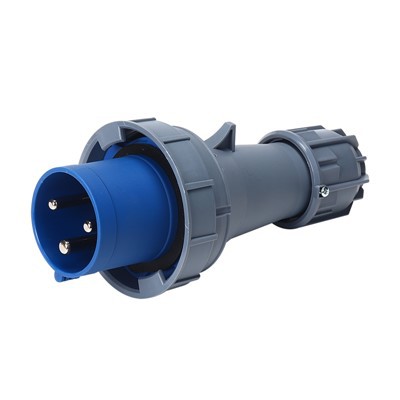
First, let’s get one thing straight: wall mount industrial sockets aren’t the same as the cheap plastic ones you grab at the corner store for your home’s garage lights. These things live in harsh conditions—think dust, oil splatters, heavy vibration, extreme hot or cold temps—so every material has to pull its weight. Let’s start with the most obvious part, the one you touch: the housing. Yeah, the outer shell. I’ve seen people argue back and forth about plastic vs. metal, and honestly, both have their place, but for 90% of industrial use cases, high-grade thermoplastic is the way to go. Wait, not all plastic is equal, right? We’re not talking about the flimsy tupperware stuff. The best ones use something called polycarbonate (PC) or a blend of PC and acrylonitrile butadiene styrene (ABS) — sometimes called polyblend. Why? Let’s run through it: polycarbonate is super tough, it can handle impact without cracking, and it’s heat resistant up to like 120°C (that’s 248°F) so if a wire inside overheats, the housing won’t melt or catch fire easily. Add in ABS, and you get extra flexibility and resistance to chemicals—oil, grease, cleaning supplies, whatever gets splashed on a factory wall. The polyblend hits that sweet spot: it’s lighter than metal, way cheaper, and doesn’t conduct electricity at all, which is non-negotiable for safety.
Now, when would you go metal housing? Usually if the socket is going in a super high-vibration spot—like next to a conveyor belt that shakes nonstop, or a construction site where stuff might get dropped on it. For those cases, we use either stainless steel or zinc alloy. Stainless steel is the heavy hitter: it’s corrosion-resistant, can take way higher temps (up to like 200°C, 392°F) and can withstand literal impacts without bending. Zinc alloy is a middle ground—it’s a bit lighter and cheaper than stainless, still way tougher than plastic, but it’s more prone to rust if it’s in a super wet, marine-type environment. The big red flag here? If you see a metal housing that’s just bare steel (not galvanized or coated), skip it. It’ll rust in six months, and no one wants a rusty socket hanging on their wall.
Next up, the contacts—this is the part that actually carries electricity, so if these are garbage, the whole socket is garbage. I can’t tell you how many times I’ve had a customer come back with a socket that’s arcing, and the problem is Contacts made of just plain copper. Wait, copper is good, right? Yeah, but pure copper is soft. It’ll wear down fast when you plug and unplug equipment over and over, and that leads to loose connections, heat buildup, and eventually failure. So top-tier industrial contacts are usually brass-plated with either tin or copper, or even better, silver alloy. Silver is the best conductor of electricity out there, so it minimizes resistance (which means less heat) and it’s super durable. Wait, but silver is expensive, right? So some manufacturers use a silver coating over a copper core—cheaper than solid silver, but still gives you the conductivity you need. The worst? Contacts made of aluminum or cheap tin-plated steel. Aluminum oxidizes super fast, so you get high resistance the second it’s exposed to air, and tin-plated steel bends too easily, so it won’t hold a plug tight. Trust me, I’ve tested both, and the cheap ones are not worth the hassle.
Then we have the insulators inside the socket—these are the pieces that separate the live contacts from each other and from the housing, so no electricity leaks where it shouldn’t. This isn’t the same as the housing; it’s way smaller and has to handle even higher heat and voltage. The standard here is thermoset plastic, specifically something called bakelite or melamine. Wait, bakelite is the old-school stuff, right? Yeah, but it’s still used because it’s super heat resistant (can handle up to 150°C/302°F) and it doesn’t deform when it gets hot. Melamine is similar, a bit more flexible, and more resistant to chemicals than bakelite. Some premium sockets also use ceramic insulators for ultra-high voltage applications—like 480V or more in heavy industry. Ceramic can handle temps way higher than plastic, is totally non-conductive, and doesn’t break down even in super harsh conditions. The downside? Ceramic is brittle, so you only use it if the socket isn’t going to get dropped or banged around.
Another part that people sleep on is the terminal screws and the internal wiring. Terminal screws are what clamp the power wires to the contacts, so they have to be corrosion-resistant and strong. Most good ones are made of steel with a zinc or nickel coating to prevent rust, and they have a cross-head or hex head so you can tighten them properly without stripping. Avoid Phillips head screws with cheap plating—they strip so easy, and then you’re stuck with a loose wire that’s a fire hazard. The internal wiring itself: industrial sockets use stranded copper wire, not solid. Stranded is more flexible, so it’s easier to work with and less likely to break if the socket gets jostled. Gauge matters too—thicker wire for higher amperage, obviously. If you see a socket that uses solid wire or thin gauge wire for a 30A application, run. That’s a recipe for overheating.
Wait, what about features like dust resistance or water resistance? Those materials matter too. A lot of industrial sockets have an IP rating, right? IP65 is super common for wall mount ones that get exposed to the elements or hose-downs. To get IP65, the socket has a rubber or silicone gasket around the opening where the plug goes, and the housing is sealed tight. Silicone gaskets are way better than rubber for this—they hold up in extreme temps, don’t degrade from oil or chemicals, and stay flexible for years. Rubber gaskets crack in like two years if they’re in a hot warehouse, trust me.
Now, let’s talk about what actually works for different uses, because you don’t need the most heavy-duty socket for every job. If you’re putting one in a dry, low-vibration workshop for power tools, a polycarbonate-ABS blend housing with tin-plated brass contacts and melamine insulators is perfect—cheaper, lightweight, easy to install. If it’s for a loading dock where it gets rained on and plugged in with heavy equipment, go stainless steel housing with silver-alloy contacts and a silicone gasket for IP67. And if it’s for a construction site where stuff gets dropped all the time, zinc alloy housing and reinforced contacts will save you from replacing a socket every month.
I get it, shopping for industrial parts can feel overwhelming, especially if you’re not an electrician. That’s why as a wall mount industrial socket supplier, we don’t just sell parts—we help our customers figure out exactly what they need, no upselling or confusing jargon. We’ve tested all these materials ourselves, so we know that cutting corners on housing material or contacts is never worth it. I’ve seen a factory shut down for 12 hours because a cheap socket’s contacts fused together, and that cost them way more than buying premium sockets in the first place.
If you’re currently replacing old sockets, upgrading a workshop, or outfitting a new industrial space, you don’t have to guess which materials to go for. Just reach out to our team—we’ll walk you through the specs, break down the cost vs. durability, and get you the right wall mount industrial sockets for your exact needs. No hidden fees, no weird fine print, just parts that actually hold up.

Wait, a quick recap just to make sure you don’t miss the key points: housing = polyblend for general use, stainless/zinc for harsh conditions; contacts = silver alloy or tin-plated brass, skip the aluminum/steel; insulators = thermoset plastic for most jobs, ceramic for high voltage; gaskets = silicone for weather resistance. That’s all you need to know to avoid junk sockets that will cause headaches later.
Wall Mount Industrial Socket References:
- National Electrical Manufacturers Association (NEMA). “Industrial Control and Wiring Devices Standard for Wall-Mount Receptacles.” NEMA Publications, 2022.
- International Electrotechnical Commission (IEC). “Low-voltage Switchgear and Controlgear – Part 1: General Rules.” IEC 60947-1, 2020.
- Society of Plastics Engineers (SPE). “Engineering Thermoplastics for Electrical and Industrial Applications.” SPE Technical Report, 2021.
- Underwriters Laboratories (UL). “Standard for Safety: Attachment Plugs and Receptacles.” UL 498, 2023.
Zhejiang Hefeng Electric Co., Ltd.
Zhejiang Hefeng Electric Co., Ltd. is one of the most professional wall mount industrial socket manufacturers and suppliers in China, featured by quality products and low price. Please rest assured to buy durable wall mount industrial socket made in China here from our factory. Also, OEM service is available.
Address: Wenzhou Daqiao Industrail Park, Beibaixiang Town, Yueqing City, Zhejiang Province, China
E-mail: hefengplug@chinahfe.com
WebSite: https://www.hfcee.com/
